7 Essential Pages Every Small Business Website Should Have
A practical guide to the pages that help visitors understand your business, trust your offer, and take the next step.
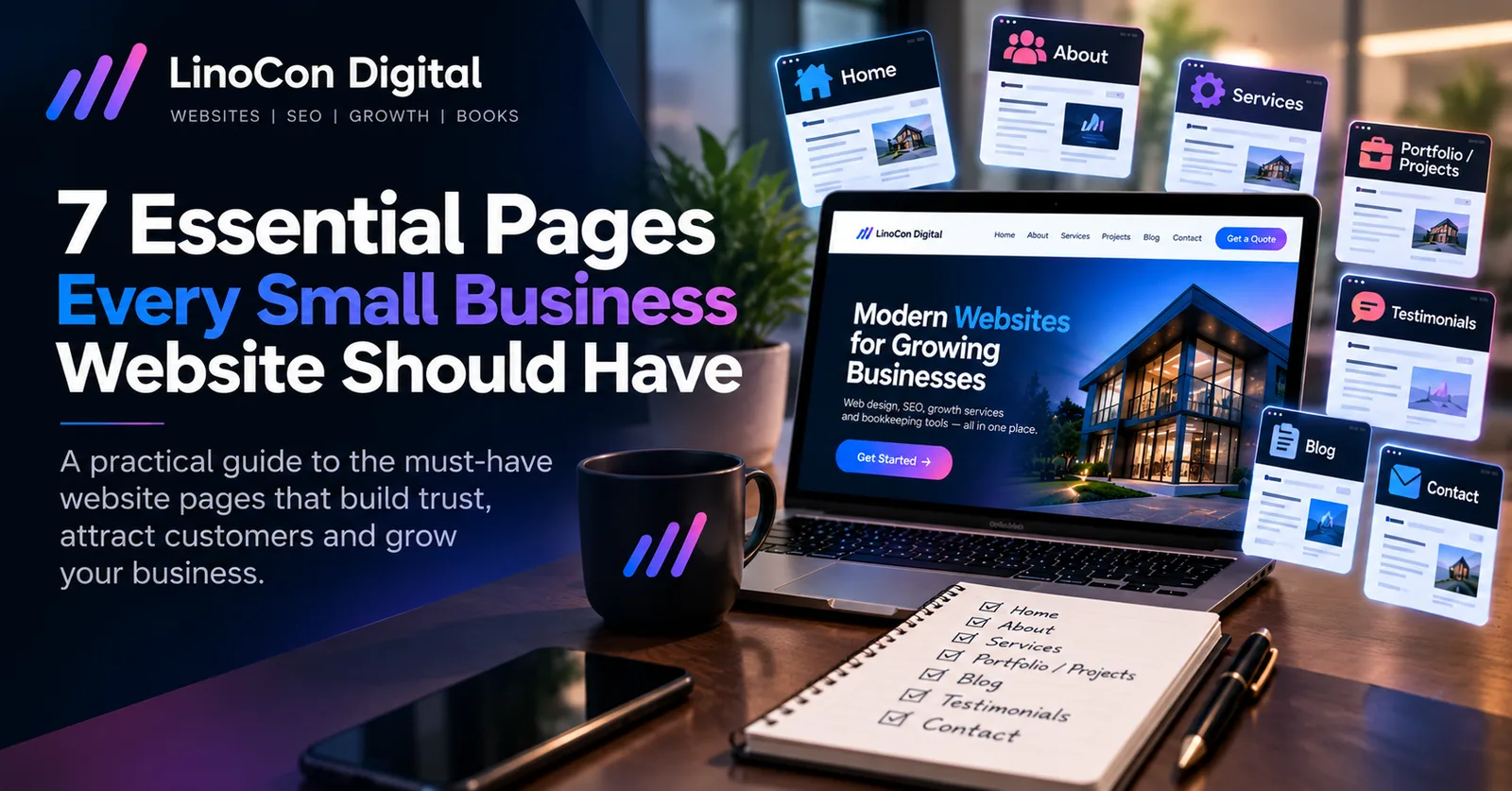
A website does more than put your business online. It gives potential customers a place to understand what you do, decide whether you are a good fit, and contact you when they are ready. Too few pages can leave visitors with unanswered questions, while too many unnecessary pages can make a site harder to navigate. The right structure depends on your business model, audience, and goals. For many small businesses, these seven page types provide a strong starting point.
1. Home page: explain what you do
Your home page is often the first introduction visitors have to your business. People should quickly understand what you offer, who you help, and what they can do next. Include a clear headline, a short description of your offer, links to key services or products, genuine trust signals, contact information, and a prominent next step such as requesting a quote, booking a call, or shopping. Avoid vague headlines that sound impressive but do not explain what your business actually does.
2. About page: show the people behind the business
Customers often want to know who they may be working with before making contact. Explain your background, values, experience, and approach. Depending on your business, this may include the founder's story, team introductions, qualifications, service area, or principles that guide your work. Keep the focus on the customer too: explain how your experience or approach benefits the people you serve.
3. Services or products page: make your offer clear
Visitors need to understand what they can buy or hire you to do. A Services page suits service businesses; a Products page or catalogue may suit businesses selling goods. Explain what each offer includes, who it is for, and how to take the next step. If you offer several distinct services, give each major service its own page when there is enough useful information to justify it. Describe the problem you solve, the process customers can expect, and any important requirements, not just the service name.
4. Contact page: make reaching you easy
Make the next step straightforward on desktop and mobile. Depending on your business, include a contact form, email, phone number, service area, business hours, and links to social platforms you actively use. If customers visit a physical location, include the address and useful directions. Keep forms short, ask only for information needed to respond, and test every form and contact link periodically.
5. Testimonials, reviews, or case studies: provide relevant proof
Genuine customer feedback, project examples, and case studies help visitors understand what working with you may be like. Use authentic testimonials with permission and follow applicable rules. Explain a case study's challenge, work completed, and outcome without exaggerating or suggesting every customer will get the same result. If you are new and have no testimonials, show sample work, explain your process, or introduce relevant qualifications. Never invent reviews. This content can sit on the home or service pages until you have enough examples for a dedicated portfolio.
6. Frequently asked questions: answer common concerns
An FAQ page or section can answer questions that delay a customer's decision. Common topics include pricing, timelines, delivery, service areas, payment methods, revisions, returns, warranties, and what happens after someone makes contact. Use real customer questions and answer them directly. If a question relates to one service, place the answer on that service page when that is more helpful than sending visitors to a long general FAQ list.
7. Privacy policy and other required information: explain how you handle data
If your website collects personal information through forms, analytics, bookings, accounts, or purchases, visitors should be able to find clear information about how their data is handled. A Privacy Policy is an important starting point, and applicable laws may require specific disclosures or additional pages. Depending on your business, you may also need terms and conditions, returns or refund policies, shipping information, cookie disclosures, accessibility information, or industry-specific notices. Requirements vary, so do not copy another website's legal text and assume it applies to you.
Do you need all seven pages at launch?
Not necessarily. A simple business can begin with a well-organized home page containing sections for the business story, services, trust signals, and contact details, alongside necessary privacy and legal information. As the business grows, separate sections into dedicated pages when that makes information easier to find or serves a distinct customer need. The aim is not a particular page count; it is helping visitors answer: What does this business do? Is it right for me? Can I trust it? What should I do next?
How these pages support search and conversions
A clear structure can help visitors navigate and help search engines understand the purpose of your pages. Give each page a clear topic, useful content, descriptive title, logical headings, and relevant internal links. Avoid creating thin pages just to target slight keyword variations. Create separate pages when the service, product, audience, or question is meaningfully different. Page count alone does not guarantee rankings, leads, or sales.
How LinoCon Digital can help
Planning the right pages is an important part of building a website that looks professional and gives visitors a clear path forward. LinoCon Digital helps businesses establish and improve their online presence through Website Creation, SEO Setup, and Backlink Building.
Our Website Creation service focuses on shaping a website around your business goals, audience, content, and customer journey. SEO Setup can establish foundational technical and on-page elements, while Backlink Building may support a broader SEO strategy when relevant, quality-focused opportunities are appropriate. You do not need every possible page immediately: start with what your customers need most, make the information clear, and expand as your business develops.
Ready to plan a website around your customers' needs? Explore LinoCon Digital's Website Creation service and choose a practical next step for your business.
Quick website page checklist
- Home page explains what you offer and who you help.
- About page builds understanding and confidence.
- Services or products are described clearly.
- Contact details and forms work on mobile and desktop.
- Testimonials or examples are genuine and used with permission.
- Common customer questions are answered.
- Privacy and other applicable legal information is easy to find.
- Page titles, headings, and internal links are relevant.
- Each page has a useful next step where appropriate.
Frequently asked questions
What is the most important page on a small business website?
The home page is often an important entry point, but it depends on how customers find you. Someone arriving from a search for a specific service may need a detailed service page more than the home page.
Should every service have its own page?
Give each major service its own page when customers need distinct information and there is enough substance to explain it properly. Closely related services can share a page at first if that makes the offer clearer.
Does having more website pages improve SEO?
Not automatically. Useful pages can address different customer needs, but adding low-value pages simply to increase page count is not a sound strategy. Focus on usefulness, clarity, accessibility, and search intent.
Do I need a Privacy Policy?
If your site collects or processes personal information, a Privacy Policy is often important and may be legally required depending on your circumstances. Requirements depend on your location, audience, and how the website operates; seek appropriate guidance where needed.
Final takeaway
The best small business website is not necessarily the one with the most pages. It is the one that gives visitors the information they need, builds appropriate trust, and makes the next step clear. Start with the essentials and expand when your customers and business goals call for it.
For businesses that want help planning or improving their online presence, LinoCon Digital offers Website Creation, SEO Setup, and Backlink Building. Explore the service that fits your needs and build your website around the people you want to reach.
LinoCon Digital | Get found. Get chosen. Get growing.
Want this handled for you?
Book a free strategy call and we'll show you exactly where your website and SEO have room to grow.
Book a Strategy Call